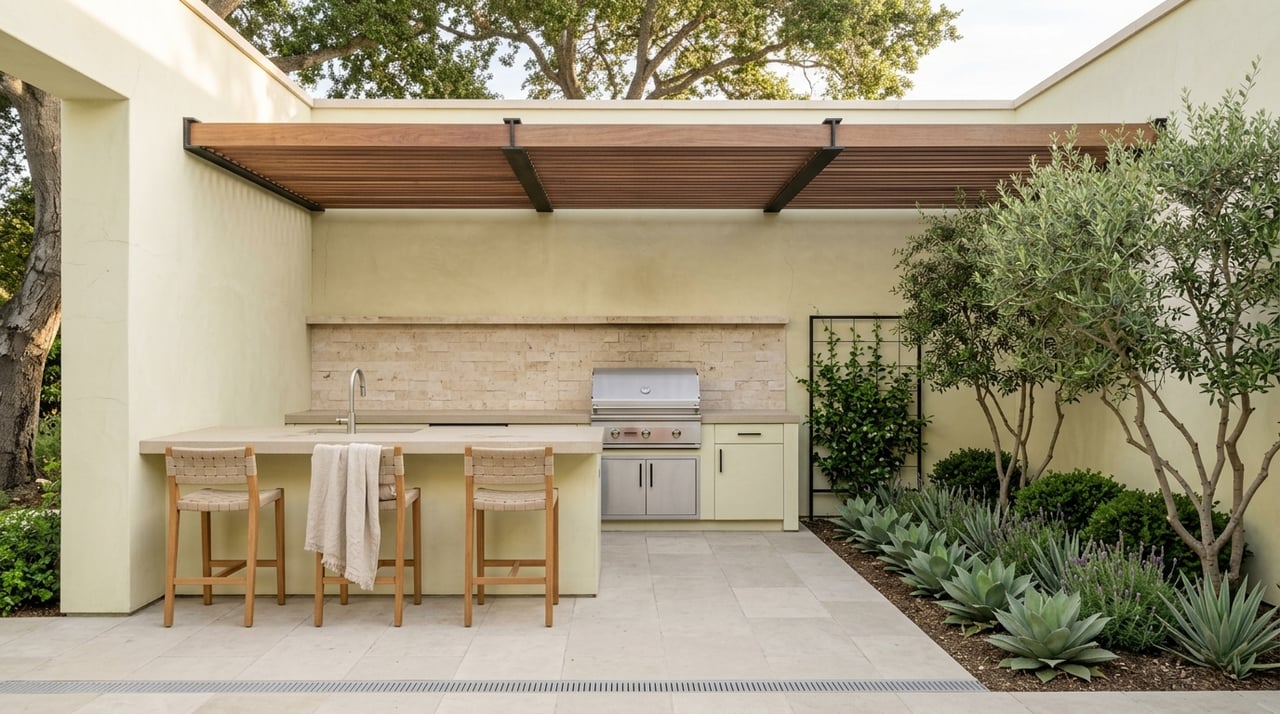
Montecito Second Home Guide for a Confident Purchase
July 9, 2026
July 9, 2026
If you are considering a second home in Montecito, you are not just buying square footage. You are choosing a setting, a pace, and a property that needs to fit how often you will use it, how much upkeep you want, and whether you may eventually rent it. In a market where parcel, views, access, and review rules can matter as much as the house itself, a clear plan can save you time and costly surprises. Let’s dive in.
Montecito is shaped by a community plan that emphasizes a semi-rural residential character, extensive landscaping, open space, ocean and mountain views, and narrow winding roads. For you as a second-home buyer, that means the market is highly location-specific.
A beautiful house on one street can live very differently from a similar home a short distance away. Access, hazard exposure, lot layout, privacy, and the scope for future changes can all affect whether a home feels easy and enjoyable or more demanding to own.
Public market data also shows why broad headlines only tell part of the story. As of May 2026, Zillow reported an average Montecito home value of $5,600,703, Redfin reported a median sale price of $5.7 million for the three months ending May 2026 with a median 66 days on market, and Realtor.com reported a median listing price of $7.7 million with 82 active listings and homes selling at about 94% of asking price.
Taken together, those figures point to a premium market with selective negotiation room on some properties. Redfin also describes Montecito as somewhat competitive, with some homes receiving multiple offers.
Before you narrow streets or properties, define what success looks like for you. A Montecito second home can mean very different things depending on your priorities.
You may want a furnished, turnkey retreat that is ready the day you close. You may want a private estate setting for longer stays. Or you may be thinking about occasional personal use with rental potential when you are away.
A few questions can help you focus your search:
In Montecito, those answers should guide nearly every decision that follows.
The coastal sub-area spans roughly 290 acres between Highway 101 and the Pacific Ocean. The community plan describes a mix that includes cottages, duplexes, beach-adjacent residential pockets, the Miramar and Biltmore hotel area, and clustered or condo-type development.
For many second-home buyers, this part of Montecito can be a natural fit for a more compact footprint and easier lock-and-leave ownership. If your goal is beach proximity and lower day-to-day oversight than a large estate may require, coastal locations often deserve a close look.
That said, convenience here comes with added due diligence. The community plan flags flood hazard along Montecito Creek and Hot Springs Road, so drainage, flood exposure, and access review matter more than they might in a more typical suburban purchase.
Montecito’s Village is identified in the community plan as the area’s only commercial center, served by East Valley Road, Hot Springs Road, and San Ysidro Road. The plan also notes that Coast Village Road is an important commercial strip for Montecito residents, but it lies outside the Montecito planning area in Santa Barbara city limits.
That distinction matters if you want everyday convenience without making assumptions about jurisdiction or address. Village-adjacent homes can offer easier access to shopping, dining, and services that many seasonal owners value.
Still, it is smart to keep expectations grounded. Montecito retains narrow, winding roads and only limited bikeways on portions of San Ysidro Road, East Valley Road, Hot Springs Road, and Olive Mill Road, so this is not a place to assume urban-style walkability.
The mountain sub-area borders Los Padres National Forest and is characterized by chaparral, slopes above 40 percent, extreme fire hazard, and very limited public road access and public services. Roads named in the plan include Mountain Drive, Hot Springs Road, San Ysidro Road, Romero Canyon Road, and Bella Vista Drive.
If you are drawn to privacy, elevation, and a more estate-like feel, these areas may be especially appealing. They can offer a strong sense of retreat and separation, which is often part of Montecito’s allure.
At the same time, this is where the infrastructure and hazard burden can be highest. The community plan states that the portion of Montecito above Highway 101 is classified as a high fire hazard area by the Montecito Fire Protection District, so buyers should treat road access, defensible space, and home-hardening needs as central parts of the decision.
For many second-home buyers, turnkey is the simpler path in Montecito. If you live elsewhere and want the home to be comfortable and functional right away, immediate usability can be more valuable than a theoretical discount on a project property.
That is because Montecito’s review environment is detailed. Santa Barbara County has a Montecito Board of Architectural Review and a Montecito Planning Commission, and the community plan says development and architectural guidelines apply to new projects, major exterior remodels, and teardowns.
Those guidelines address issues such as floor area by lot size, grading, scale, visual impacts, privacy, views, lighting, gates, and landscaping. In practical terms, a home that only "needs updating" may involve much more than cosmetic changes if you want to significantly alter the property.
Turnkey homes are often the best fit if you want:
For buyers who value convenience, design quality, and a seamless start, turnkey often supports the easiest ownership experience.
A value-add property can still be compelling if your goals are specific and long-term. You may want to create a custom guest house, detached office, or more tailored layout that better matches how you plan to use the home.
Just go in with the right expectations. County permitting, architectural review, and in some cases flood- or wildfire-related conditions can materially affect both your budget and your timeline.
If you hope to offset carrying costs with rental income, build that into your search from day one. Santa Barbara County’s Short-Term Rental Ordinance project and Homestays FAQ make clear that rental use is regulated in both coastal and non-coastal zones.
That means a property that seems ideal for occasional rental use may not be as simple to operate as you expect. The county Tax Collector also maintains a Transient Occupancy Taxes section, so your ownership plan should account for compliance along with revenue potential.
For some buyers, the right answer is to focus on homes that are easy to maintain, easy to furnish well, and realistic to manage during vacant periods. In Montecito, rental readiness is not only about guest appeal. It is also about operations, oversight, and local compliance.
Montecito rewards careful buyers. Along with the standard property review process, second-home buyers should pay close attention to local infrastructure and hazard conditions.
Montecito Water District supplies the unincorporated communities of Montecito and Summerland, serving an estimated population of about 12,010 through roughly 4,600 service connections. The district says it relies on a diversified water portfolio and projects no need for State Water Project supplies through Water Year 2027.
For buyers, that supports the case for relatively mature local service infrastructure. Even so, water planning remains part of responsible ownership in coastal California, especially for homes with substantial landscaping.
CAL FIRE’s Fire Hazard Severity Zone program uses Moderate, High, and Very High classifications. Montecito Fire offers complimentary defensible-space surveys and home-hardening guidance, and the district says it conducts about 200 such surveys each year.
If you are buying in hillside or mountain areas, these resources should be part of your planning. A second home that sits vacant at times should have a clear maintenance and risk-reduction strategy in place.
Flood and debris-flow risk should never be treated as fine print. Santa Barbara County says FEMA is revising Special Flood Hazard Area maps for parts of Montecito and is developing a Montecito Flood Control Master Plan for Montecito Creek, Oak Creek, San Ysidro Creek, Romero Creek, and tributaries.
Historical context matters too. USGS found that the January 9, 2018 Montecito debris-flow event killed 23 people and damaged at least 408 homes. For you as a buyer, that makes drainage review, flood-zone review, and site-specific access planning essential parts of due diligence.
If you want to buy with more clarity and fewer surprises, it helps to follow a sequence.
Decide whether the home is primarily for personal use, seasonal living, occasional rental use, or a mix. This single choice will shape the best location, property type, and level of finish.
Be honest about how hands-on you want to be. A lock-and-leave coastal property and a hillside estate can both be wonderful, but they usually ask very different things from an owner.
Review fire, flood, drainage, and access issues before you become emotionally attached to a property. In Montecito, these are not secondary details.
A home that looks dated is not always a simple refresh. If your vision includes expansion or substantial exterior changes, account for county review and approval pathways from the start.
If rental income matters, evaluate the property through that lens early. Compliance, vacant-period oversight, and ease of operation should all be part of the conversation.
Second-home ownership often runs more smoothly when you have trusted local support in place. For many buyers, that includes help with furnished property strategy, short-term rental placement, and vetted local service coordination.
The right Montecito purchase is rarely about choosing the biggest house or the most recognizable street. It is about finding the property that matches your lifestyle, your tolerance for complexity, and your plans for personal use, design, and possible rental income.
When you approach Montecito with a clear roadmap, you can buy more confidently and avoid the mismatch that sometimes comes from relying on broad market headlines alone. A thoughtful search can help you find a home that feels effortless to own and rewarding to return to.
If you are weighing turnkey options, furnished opportunities, or a second home with rental potential, Danielle Darin can help you evaluate Montecito through a local, property-by-property lens.
Stay up to date on the latest real estate trends.
Get assistance in determining the current property value, crafting a competitive offer, writing and negotiating a contract, and much more. Contact me today.